
First-look
Power of Ten Slot Review

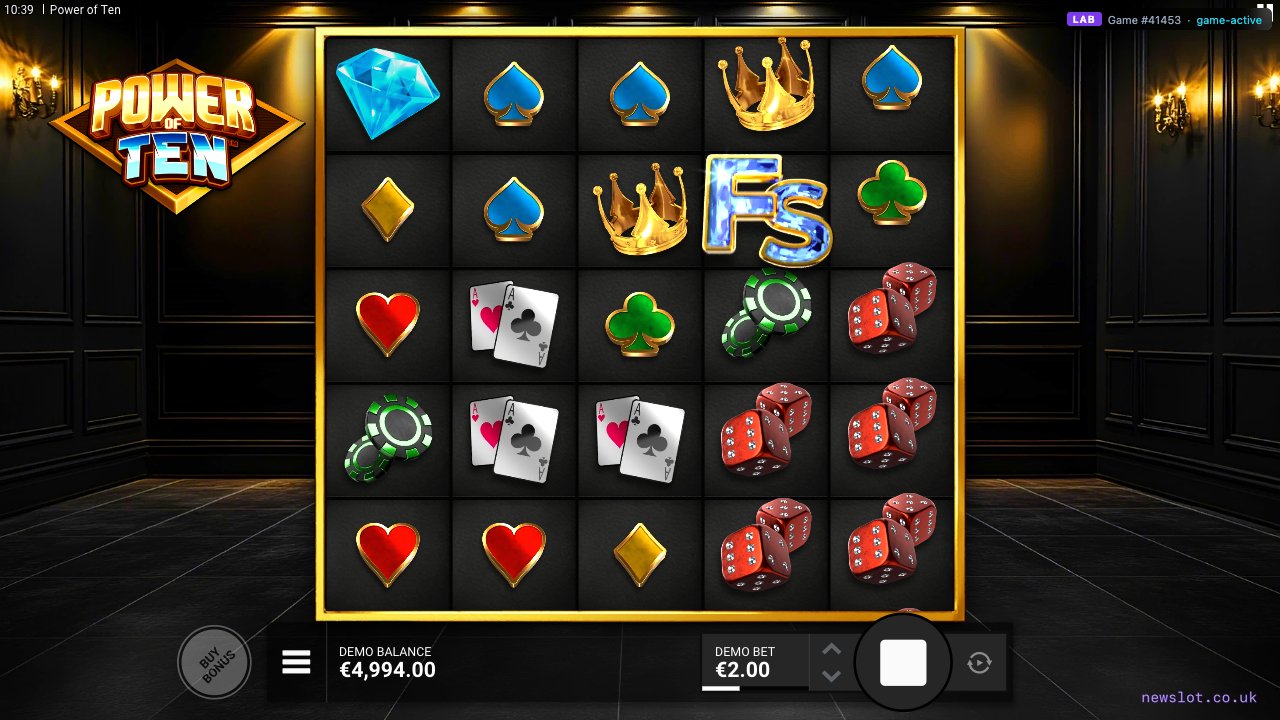
What is Power of Ten?
Power of Ten is Hacksaw Gaming’s 6-reel, fixed-payline slot, stepping outside the studio’s more familiar 5-reel templates and signalling multiplier-progression as its core mechanic. Hacksaw sits in the upper tier of independent studios, with a catalogue that runs high-volatility and bonus-concentrated, from the Western grit of Wanted Dead or a Wild to the character-led Chaos Crew series. The 6-reel grid sets an expectation the mechanic will have to justify against those established benchmarks.
How does Power of Ten play?
Power of Ten plays on a 6-reel, fixed-payline grid, placing it in the high-volatility, feature-concentrated territory that defines Hacksaw’s catalogue. The studio’s consistent approach concentrates return into bonus rounds, leaving the base game as a variance-absorbing wait, and a multiplier mechanic is a natural fit for a studio that built its name on high-ceiling, punchy features. The name implies a multiplier that escalates through orders-of-magnitude steps rather than linear additions, which would produce a wider effective ceiling and a return profile consistent with Chaos Crew 2 rather than a spread-pays base-game grinder. The 6-reel grid is the structural novelty here. Hacksaw’s 5-reel catalogue uses grid mechanics tightly, from the sticky logic of Stick’Em to the kill-count structure of Wanted Dead or a Wild. Whether the extra column carries genuine feature logic or is purely cosmetic is what the first session will establish.
What stood out?
The 6-reel grid is the most notable structural choice in Power of Ten, because Hacksaw rarely reaches for it and everything the studio builds on 5 reels already works. It is the kind of structural deviation worth flagging against the rolling UK slot release index, where 5-reel grids still dominate the week-to-week studio output. The multiplier name fits Hacksaw’s high-ceiling DNA without feeling like a stretch. The question is whether the wider grid translates into genuine combinatorial depth in the bonus or just extends the visual canvas, which is a question the 5-reel template never had to answer. If the mechanic uses those six columns to create multiplier range that outpaces the studio’s standard configurations, this has the ceiling to sit above the middle of Hacksaw’s catalogue.
Should you play?
Maybe, for Hacksaw regulars who want to see what the studio does with a wider grid. The maths model, consistent with the studio’s track record, should concentrate return into the multiplier feature rather than spreading it through the base game, putting this in bonus-dependent territory. The 6-reel structure implies a higher ceiling over the studio’s more compact configurations, but that ceiling only matters if the bonus stage is designed to use it rather than arrive at the same paytable range through a longer route.
Score: 6.8 / 10
More from Hacksaw Gaming




Where to play Power of Ten in the UK
Live at these UK-licensed casinos (verified 31 Aug 2026):